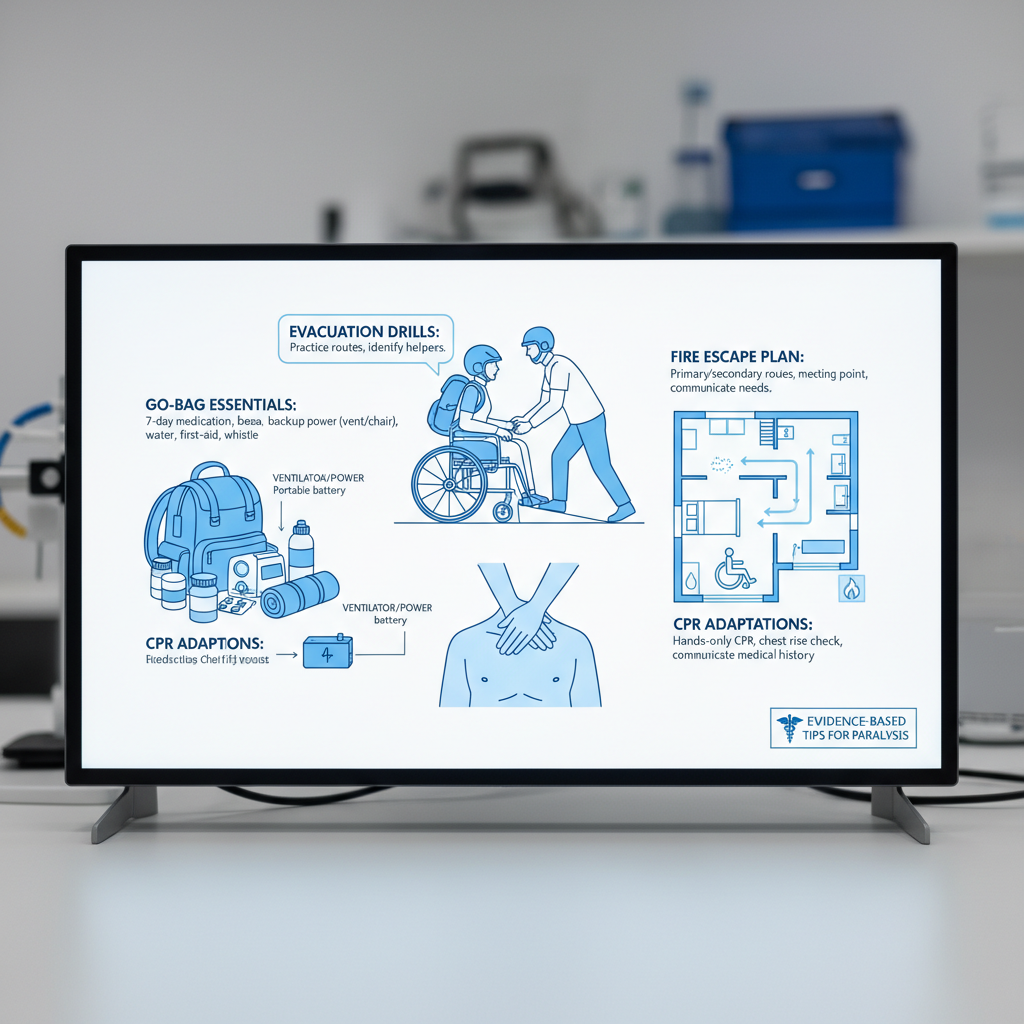

- Ocena indywidualnych potrzeb medycznych i sprzętowych przed katastrofą pozwala zachować niezależność podczas przerw w dostawie prądu lub ewakuacji.
- Torba ewakuacyjna oraz domowy zestaw awaryjny powinny zawierać zapasy leków, baterii i adapterów na co najmniej siedem dni.
- Mapy zagrożeń FEMA i programy ubezpieczeń od powodzi pomagają dostosować plan do lokalnych ryzyk takich jak huragany czy pożary.
- Zapewnienie opieki nad psami asystującymi oraz alternatywnych kanałów komunikacji SMS chroni osoby z porażeniem w sytuacjach kryzysowych.
Emergency Preparedness for People with Paralysis
Why Emergency Preparedness Matters for People with Paralysis
Natural disasters including winter storms, wildfires and hurricanes create heightened risks for individuals living with paralysis by disrupting medication access, caregiver support and safe evacuation. Power outages can immediately endanger those dependent on ventilators or other electrically powered medical devices. Planning ahead preserves health, independence and safety when routines are suddenly interrupted.
Assessing Personal Needs Before a Disaster
Track daily requirements for one week, noting mobility aids, specialized utensils, baclofen pumps and any assistance needed to transfer from bed. This record forms the foundation for scenario-specific emergency plans that account for regional threats identified through the FEMA National Risk Index.
Identifying Local Risks and Insurance Options
Geographic location determines primary hazards such as coastal flooding, mountainous wildfires or Midwest tornadoes. Review current FEMA mapping tools and consider supplemental coverage through the National Flood Insurance Program to protect adaptive equipment and home modifications.
Building an Effective Go Bag for Quick Evacuation
Assemble a ready-to-grab bag containing prescription medications, backup batteries, charging cables, copies of medical records and lightweight transfer boards. Assume no time will be available for last-minute packing during sudden events.
Stocking a Home Emergency Kit
Maintain a seven-day household supply that includes water, non-perishable food, first-aid items and spare parts for wheelchairs or respiratory equipment. Update inventory every six months to ensure freshness and functionality.
Developing Practical Evacuation Strategies
Map multiple exit routes from multi-story buildings without elevator access and identify nearby accessible shelters. Factor in potential fuel shortages and coordinate with local emergency services regarding priority assistance for mobility limitations.
Planning for Service Animals and Pets
Equip assistance dogs with current identification tags and carry recent photographs. Store two weeks of sealed food and water, veterinary records and extra leashes in waterproof containers. Confirm pet-friendly shelter policies or reserve accommodations outside the hazard zone in advance.
Maintaining Communication During Outages
Text messaging conserves battery life better than voice calls when networks are congested. Enable voice dictation features and forward landline calls to mobile devices while keeping screens dimmed and non-essential apps closed.
Monitoring Reliable Information Sources
Follow official government alerts and verified weather updates before, during and after events to receive timely evacuation orders or resource availability notices tailored to individuals with paralysis.
Źródło: Zaktualizowane wytyczne na podstawie materiałów Christopher & Dana Reeve Foundation oraz aktualnych zasobów FEMA (2024)



Komentarze czytelników 0
Bądź pierwszą osobą, która podzieli się opinią!
Twoje doświadczenie może pomóc innym — napisz, co myślisz o tym temacie.
💬 Co sądzisz? Podziel się swoją opinią
Twój komentarz zostanie opublikowany po moderacji. Adres email nie będzie widoczny.